

Archive
Why PSA testing is so important in helping a prostate cancer diagnosis
Why PSA testing is so important in helping a prostate cancer diagnosis
Putting a spotlight on men’s health
Conversations surrounding men’s health have increased in recent months with the announcement that Chris Hoy is living with prostate cancer and the Local Government Association’s latest research on the topic, which found that men are dying four years earlier than women due to a variety of socioeconomic and behavioural reasons. And according to Bupa, a quarter of men put off seeking help for their medical concerns, painting a worrying picture.
Prostate cancer is the most common cancer in men and with no screening programme in place it means that men and those closest to them need to actively be aware of the signs and symptoms of the disease. These include needing to urinate more often, difficulty in urinating, feeling that the bladder is not fully emptied or noticing blood in urine or semen.
Who is most at risk for prostate cancer?
Anyone with a prostate has a risk of developing prostate cancer, however, this risk increases for men over 50, those with a family history or Black men.
Prostate Cancer UK’s risk checker highlights a person’s risk in thirty seconds or less, as well as going into detail on symptoms and the diagnosis process, making it a great tool to share with colleagues and clients.
Men over 50 have the right to a PSA test from their GP but those with an increased risk of prostate cancer may wish to seek a test from aged 45. However, anyone displaying symptoms can also request a PSA blood test, which can indicate if further investigations are needed to help with a diagnosis.
What is a PSA blood test?
Prostate specific antigen (PSA) is a protein created by both normal and prostate cancer cells; it is perfectly normal for a person to have a small amount of PSA in their blood and this will increase with age.
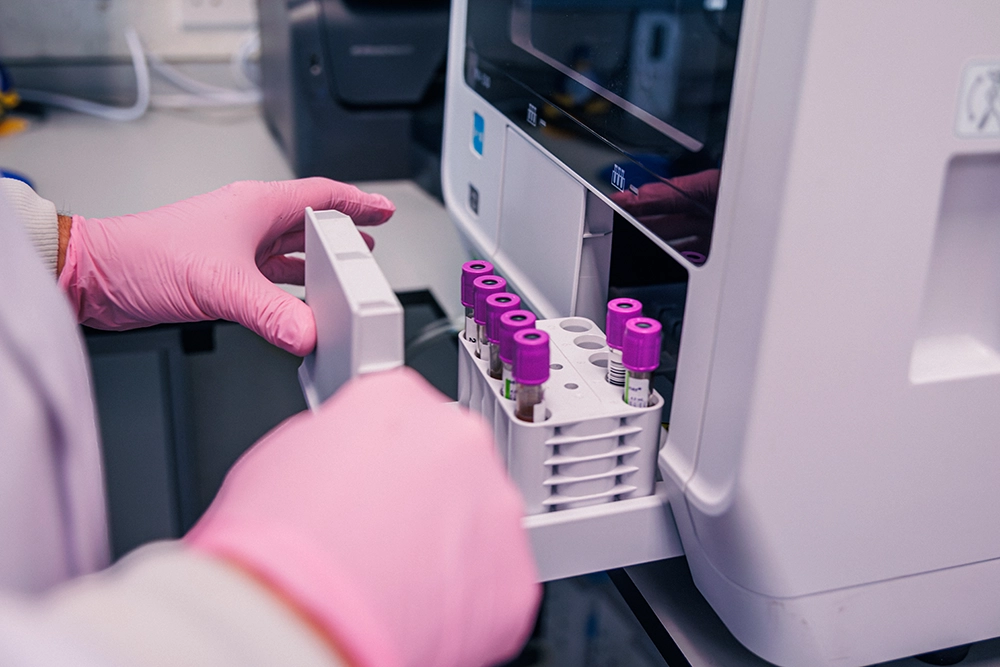
PSA can be measured from a small volume of blood via capillary blood testing (usually taken via a small prick to the finger). This is a lot more convenient, quicker and less invasive than a conventional venous draw, which involves taking blood from the vein with a needle.
A PSA count is measured using a two step immunoassay. The first step involves incubation of the specimen with specific antibodies coated with paramagnetic particles, which binds PSA in the sample. After a washing step to remove any unbound antibody, a second antibody is added and labelled with a fluorescent marker, which binds to the PSA-Antibody complex. After washing again, a solution is added which triggers a reaction to produce light, the amount of which is proportional to the amount of PSA in the sample.
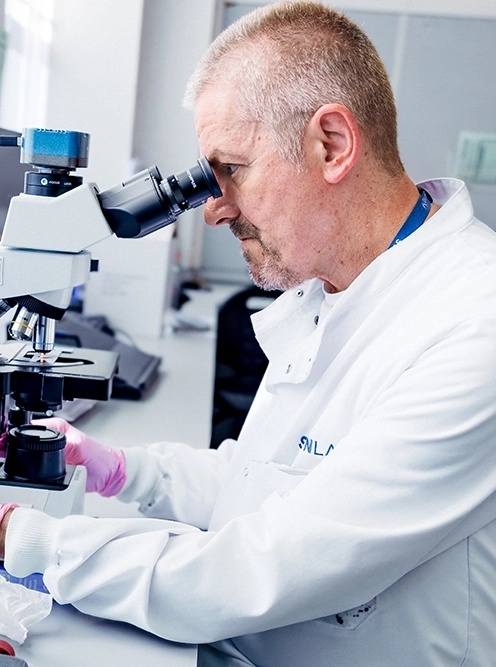
While it’s not a specific prostate cancer test, an increased level of PSA can suggest issues with the prostate gland, which may need to be examined.
Support your customers and employees with a PSA test.
As there is currently no prostate cancer screening programme in the UK, offering a PSA check as part of your services or wellbeing initiatives can be the first step in helping someone identify cancer.
Our expert pathology team conduct thousands of these types of tests each year so we’re well placed to advise on how PSA testing can be incorporated into your wellness plans.
For more information, get in touch here.
Julie Davies | Laboratory Director
Julie joined SYNLAB in February 2024 as Laboratory Director, across both the pathology and toxicology services.
She previously worked at Wye Valley NHS Trust as the Clinical Director of the Department of Pathology; a role she undertook for about seven years. Julie was involved in developing a Pathology Network solution, acting as deputy SRO for the network in that area. At Wye Valley, she was involved in bringing in a new order communications solution, procuring a new LIMS system and transforming pathology services by bringing new equipment throughout blood sciences and refurbing a new laboratory.
Julie is also a member of the Royal College of Pathologists, qualified to FRCPath level and has a PhD from Manchester University, Department of Neuroscience and an MSc in Clinical Biochemistry
